Community News
Home  »  Community News
Apr
26
Milind Pant

Seven ‘Sutras’ in the Quest for Global Leadership

Articles
0
Milind Pant

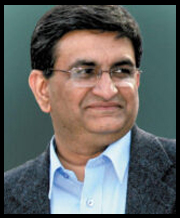
Milind Pant has lived and worked in India, South Africa and Thailand. Currently, he is based at Shanghai. Milind is the President & COO of YUM China

In a USD 75 trillion world economy, India with almost 20% of global population has just over 2% contribution. On the other hand China, in the last three decades, has turbo charged growth to become 5X the size of the Indian economy. For all of India’s strengths, size, accomplishments, it remains a country that has punched well below it’s potential.
It is a mathematical certainty that in the coming decade India will become one of the exciting, fast growing large economies. This article presents seven ‘sutras’ or threads of thoughts on the ingredients required for India’s quest for global leadership:

1. Magnet for global capital, technology

The world is awash with capital. Brazil, Russia, South Africa (of BRICS) are sputtering. Global investment funds are on the lookout for the next growth market. In parallel, global companies are scanning the horizon for a low cost manufacturing alternative to China. Vietnam, Thailand are options but India has a much larger labor pool (& growing). It also has the bonus of a large domestic market, strong foundation in engineering, management talent plus a proven track record in adapting, developing new technology.
As India becomes an easier place to do business; with stable policy, tax and currency, it is destined to become a magnet for global capital, ideas, technology.

2. Achieve global scale

Global leadership requires global scale. In the Fortune 500, among the top 10, there are two American and three Chinese companies. China’s ICBC is the largest bank in the world by assets. For India, achieving global scale may require some deft pragmatism. Some of India’s largest companies- SBI, ONGC, Coal India, NTPC are state owned and need to be unleashed to build global capabilities, competitiveness and eventually scale.
In addition, India’s private sector has the platform of a large domestic market which, coupled with access to global capital and smart overseas acquisitions, has the potential to build world class companies.

3. Build iconic brands

Today, there is no Indian brand in the Interbrand Top 100 global list. Iconic brands are built on the foundation of great products. India has the potential to build big businesses, brands in new sectors likeDigital and the ones with distinct ‘Indianness’ such as movies, food, fashion. After all, five years back, it was unthinkable for Xiaomi, Huawei, Taobao, WeChat, Haier to embark on a quest to build global Chinese brands.

4. Turbo charged urbanization

China’s development in the last three decades has been driven by planned urbanization — adding 1% of urban population every year. Today, 55% of China’s population lives in cities that are connected with high speed bullet trains and highways.
India with its democratic credentials, inclusive society can lead the world with innovation in urban development, management and local government accountability. In China and America, city mayors compete for attracting businesses. Chengdu, a city in western, inland China claims to be the home of 230 Fortune 500 companies. Michael Bloomberg, one of America’s most celebrated entrepreneurs, ran NYC for a decade.

5. Nurture world class universities, technology labs

During the Gupta dynasty, some of the world’s best institutes of learning were in India. Before WWII, some of the top universities were in Germany. Today, the best ones are predominantly American. Silicon Valley has a symbiotic relationship with the web of universities in and around San Francisco.

None of India’s institutes feature in Top 10 or even 100. In order to be a global leader, IISc, IITs and FMS will need to step up to attract global faculty, students, private funds and a culture of restless creativity.

6. Innovate with social entrepreneurship

India cannot aspire to economic greatness with a fourth of India’s population below the (USD 1.25 per day) poverty line. On most of the Millennium Development Goal, India remains a laggard. The opportunity is for India to be a world leader in Social entrepreneurship — innovating new business models in nutrition, sanitation, education, agriculture, banking and more.

7. New model of local accountability

Despite all the above ingredients, India can ‘trip’ on its journey to economic greatness without fundamentally transforming the micro part of the government bureaucracy — the one that touches the everyday life of every entrepreneur. The district (akin to Swiss ‘canton’) is the smallest unit of administration in India. District administration must be accountable to all entrepreneurs (in fact, all citizens) to provide timely licensing, inspections, efficient services, utilities, maintenance of infrastructure — all with digital enabled transparency, accountability.

In modern times, China has had the fastest per capita GDP growth of 30X in the last 30 years! Now the stars are aligned for India’s marathon to economic greatness with disciplined planning, pragmatism and flawless execution of the seven ‘sutras’.

Apr
25
Mr. Pravin Malhotra

Make in India : A trillion Dollar Question

Articles
0
Mr. Pravin Malhotra

“Pravin Malhotra is Chairman and Managing Director of Nipman Fastener Industries Pvt. Ltd. His company has been repeatedly acknowledged for world class practices & has won several national awards. He has been on the Executive Committee at Auto Components Manufacturing Association (ACMA) & has participated in several international business delegations . He has also served as Assistant Governor Rotary District 3010 & President, Rotary Club of Noida.”

The 16th of May 2014 was a historic day in the history of modern India. The Indian citizenry put it’s faith behind a man for his track record and historic performance. The process was almost equivalent to shareholders pushing up a divisional head to be CEO of their conglomerate.

This CEO, our honorable Prime Minister immediately started travelling worldwide – not only making the India flag fly high but also attracting foreign manufacturers to invest in India. Prime Minister Modi definitely understands the 4 Ps of marketing – he started an aggressive campaign called “Make in India”, selling his vision to the biggest of corporates in the world. It is a tribute to his vision that the Taiwanese manufacturer Foxconn committing to a 5 Billion Dollar investment in India.

While the external image has been worked on, we are also seeing some strong intent on the domestic front. The Goods and Services Tax – which for years has been in the pipeline has been brought to the forefront with a commitment by the government to have it implemented by April 2016.

India today not only has a population above a billion, but is also the world’s youngest demography – with 356 million 10 to 24 year olds who would future assets of this nation in an otherwise aging world. A population that would be a dynamic working population in times to come! In addition, with an aggregate population of above 1.2 billion, India also promises to be a big market which any company would ignore only at it’s own risk!

Flexible labour laws, something that was considered too adventurous to talk about have become a reality today. This, thanks to India’s federal structure with states competing for investments – and Rajasthan showing the way in this area! Our Prime Minister has been a Chief Minister in the past – he would be perfect in understanding the power of a federal structure encouraging states to compete with each other in
attracting investments which would eventually lead to employment!

If one does look at the larger picture, the India of today has the resources and the manufacturing units to efficiently use these resources. The India of today also has the consumer base to identify markets for these resources – a dream land for investors to tap in!

Recently, Google appointed Sundar Pichai as it’s CEO. With Satya Nadella running Microsoft and now Pichai running Google, we don’t need a better endorsement
of the power of the Indian mind. With a PM aggressively pushing forward the ‘Make in India’ campaign, and India leading the way in demographic and intellectual
excellence answers are coming easily for the Trillian Dollar Question on Make in India

Apr
21
admin

FMS Diamond Jubilee Celebrations

News & Events
0
PAST ACTIVITES

Diamond Jubilee Celebrations of FMS

Panel discussion on ‘India’s Roadmap to Global Leadership’ – Challenges & Imperatives – Participants:

Rajiv Mehrishi,
Finance Secretary, Rajiv Memani, Managing Partner – E&Y, Banmali Agrawala, President – GE South Asia,
Moderator: Raghav Bahl

image1 image2 image3 image4 image5 image6

Seminar on ‘Make in India – A Trillion Dollar Question’ at Vigyan Bhavan
Keynote Address: Late Shri Arun Jaitley, Hon’ble Union Minister of Finance

Panelists: Amitabh Kant, Secretary, DIPP, Sunil Munjal, Jt. Managing Director, Hero Motorcorp Ltd.,
Richard Rekhy, CEO, KPMG India
Moderator: Ms Shereen Bhan, Managing Editor, CNBC TV 1

image7

Know this Market called India
Mr. Shekar Swamy
CEO R K SWAMY HANSA Companies
image10
Support to:  E-cell and Financial Society initiatives

The Marketing Society and Entrepreneurship Cell of FMS
image11

Sponsor E – Summit

image12 image13

Apr
21
admin

Panel Discussion 2015

News & Events
0

Panel Discussion : India’s Roadmap to Global Leadership : Challenges and Imperatives

To commemorate 60 Glorious Years of FMS, and to herald start of celebrations, THE FMS FORUM organized a panel discussion on the contemporary issue ‘’India’s Roadmap to Global Leadership: Challenges & Imperatives’ on 21st March, 2015 at Hotel Shangri-La Eros, Delhi. The discussion was steered by an eminent panel comprising of

  • Mr Rajiv Mehrishi, Secretary, Ministry of Finance
  • Mr Rajiv Memani, CEO & Managing Partner, Ernst &Young India
  • Mr Banmali Agrawala, President & CEO,GE South Asia

The panel discussion was moderated by our Alumnus Mr Raghav Bahl, Founder & Managing Director, Quintillion Media Pvt. Ltd. The event was attended by over 130 participants comprising of Alumni, Faculty & Current Students.

file_extension_pdfDownload Brochure